Online Degree vs Regular Degree in India: Which Has Better Career Scope?
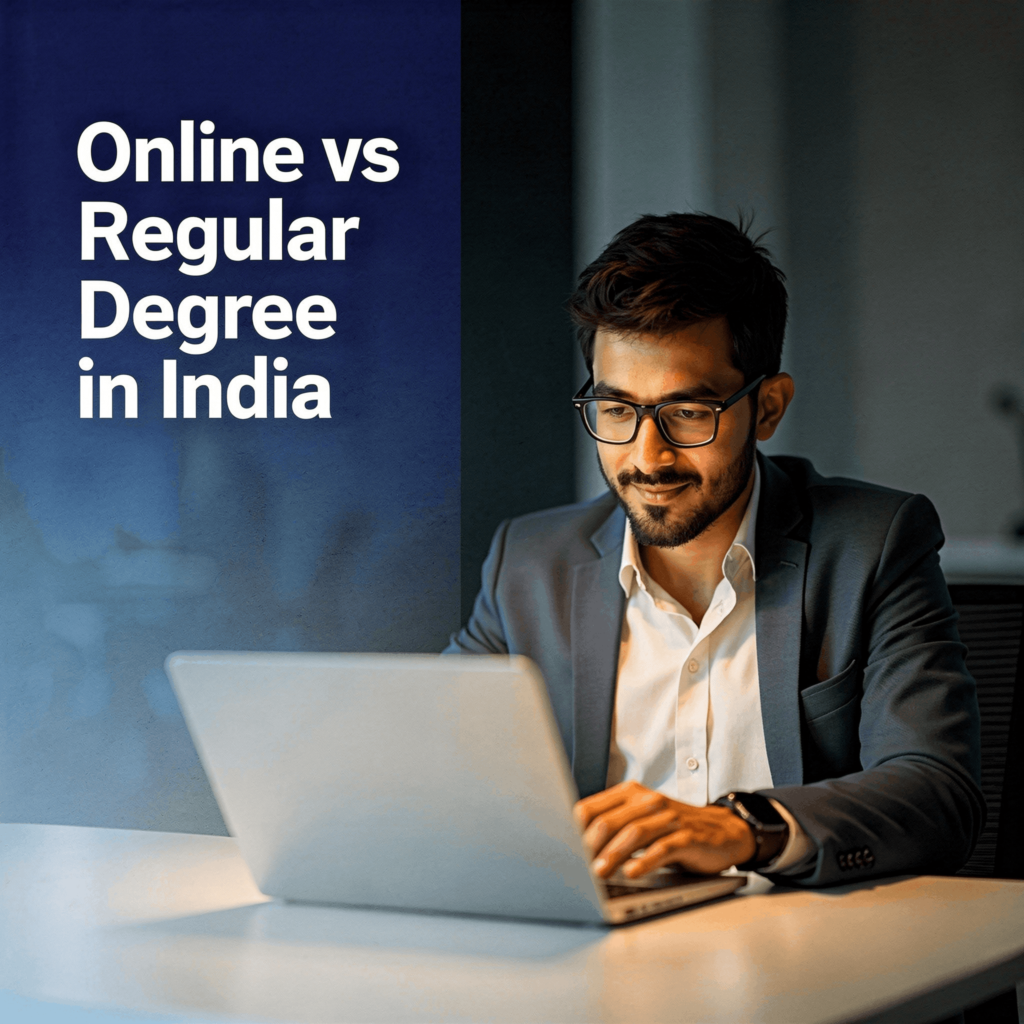
Higher education in India is going through a powerful shift. A few years ago, students and parents hesitated before choosing an online degree, often worrying about recognition, employer acceptance, and long-term career value. Today, that conversation looks very different. With regulatory clarity and growing industry acceptance, learners now compare online degree courses and traditional campus programs based on lifestyle, career goals, and flexibility rather than just validity.
If you’re trying to decide between an Online degree vs regular degree in India, this guide will help you make a clear and practical decision.
Recognition and Regulatory Status of Online Degrees in India
One of the most important considerations when comparing education formats is official recognition. The University Grants Commission (UGC) has established guidelines stating that online programs offered by approved universities hold the same academic value as their on-campus counterparts. This regulatory clarity has strengthened employer trust and student confidence in online higher education.
Key Takeaways:
- The Degree Awarded Is the Same
For programs offered by UGC-approved universities, the degree certificate issued upon completion does not specify “online” or “distance.” It is awarded as the official degree of the university. - Academic and Career Validity Is Equal
A recognized online degree holds equal validity for employment, eligible government opportunities, and higher education, as per existing regulatory guidelines.
This is especially relevant for working professionals considering options like an online MBA, online BBA, or other career-focused online degree courses.
Career Scope: How Online Degrees Compare with Traditional Degrees
When deciding between an online degree vs regular degree in India, the ultimate question for most students is career scope: which option provides better long-term opportunities, growth, and employability? Regulatory approval and growing industry acceptance have placed online degree courses on par with traditional degrees in terms of recognition.
However, career outcomes depend on multiple factors: the field of study, the reputation of the university, practical experience, and individual skills.
1. Employer Perspective
Recent surveys and reports indicate that employers in India increasingly value skill, knowledge, and practical experience over the mode of education.
- Corporate Sector: Major IT firms, consulting companies, and startups now recognize online degrees from UGC-approved universities as valid credentials. Employers prioritize relevant skills, certifications, and work experience.
- Management Roles: Online MBAs and executive programs are highly valued for professionals seeking career advancement while continuing to work. Online learners demonstrate strong time management, self-discipline, and adaptability, qualities increasingly sought by employers.
- Skill-Based Careers: Fields such as data analytics, digital marketing, finance, and IT offer significant opportunities for online learners who combine academic credentials with industry certifications.
2. Career Growth and Salary Potential
Professionals with recognized online degrees in India can achieve career growth and salaries comparable to traditional degree holders, especially when:
- The online degree is from a reputable university
- Students gain certifications and hands-on experience alongside the degree
- The learner actively participates in projects, internships, or freelance work
For example, an online MBA or specialized professional program can lead to leadership roles in mid-sized to large companies. On the other hand, a technology-focused online degrees often open doors to high-demand roles like data analyst, software developer, or business analyst.
3. Industry Acceptance Across Major Sectors
Acceptance of online degrees in India has grown significantly across sectors where knowledge application matters more than physical classroom presence:
- IT & Technology: Recruiters prioritize coding skills, tools knowledge, and certifications. Many hiring managers assess GitHub profiles, technical tests, and project experience rather than the mode of study.
- Banking, Finance & FinTech: Roles in analytics, operations, compliance, and financial services increasingly consider candidates with online commerce, finance, or MBA degrees, provided the university is recognized.
- Marketing & Business Strategy: Digital marketing, performance marketing, brand strategy, and business analytics are skill-driven fields where online learners often excel due to exposure to digital tools and case-based learning.
Which Degree Should You Choose?
Choosing between an online degree vs regular degree in India depends largely on your lifestyle, responsibilities, and career goals. An online degree is ideal for working professionals, career switchers, and learners who need flexibility to balance studies with jobs or personal commitments. It is also suitable for students seeking affordable education without relocating, and for those comfortable with independent, digital learning environments.
On the other hand, a regular degree is often better for fresh school graduates who want structured classroom learning, in-person faculty interaction, and full campus exposure. Traditional programs may also benefit students in lab-intensive or field-based disciplines that require physical infrastructure.
Both formats offer a strong career scope when pursued from recognized institutions. The key is to choose a learning mode that supports your performance, consistency, and long-term career direction rather than simply following conventional preferences or trends.
Why Choose Skill2Work for Your Online Degree Journey?
Selecting the right university and course matters as much as choosing the degree format. That’s where Skill2Work supports students with expert-driven guidance.
Skill2Work helps you by:
- Providing counselling for multiple UGC-approved universities
- Helping you compare online degree courses based on career outcomes
- Guiding you toward programs aligned with industry demand
- Assisting working professionals in choosing flexible, career-focused options
- Simplifying the admission process with personalized support
Instead of guessing which online degree in India is right for you, Skill2Work ensures your decision is career-oriented and future-ready.
Start Building a Career That Fits Your Future
The debate around Online degree vs regular degree in India is no longer about validity; it’s about strategy. The right degree, chosen at the right time, can accelerate career growth, open better job roles, and increase long-term earning potential. Online education has emerged as a powerful pathway for learners who want flexibility without sacrificing recognition or career scope.
With the right guidance, this choice becomes easier and more effective. Skill2Work connects you with trusted universities and helps you select programs that match your career goals, not just trends.
Don’t just pick a degree. Pick the one that works for your future. Connect with Skill2Work today and take the first step toward a smarter career move.
FAQs
- Is an online degree valid for jobs in India?
Yes, an online degree in India from a UGC-approved university is valid for private jobs, higher studies, and many government opportunities as per eligibility norms. - Which has better career scope: an online degree or a regular degree?
Career scope depends more on skills, university reputation, and practical experience than on learning mode, making both options strong when chosen wisely. - Are online degree courses accepted by employers?
Most employers now accept recognized online degree courses, especially in IT, management, finance, and digital-focused industries where skills matter most. - Can I get a good salary after completing an online degree?
Yes, salary growth depends on your field, skills, certifications, and experience, not just whether your degree was online or regular. - Who should choose an online degree over a regular degree?
Working professionals, career switchers, and students needing flexibility or affordability often benefit more from pursuing an online degree.